
September 24, 2026
September 24, 2026
A seller in one of Durham's older neighborhoods sits down with the North Carolina Residential Property Disclosure Statement, the state form every seller has to complete before listing, and lands on the wiring section. Knob-and-tube: yes, no, or no representation. A few lines down, polybutylene piping asks the same three-way question. The seller has lived in the house for a decade and genuinely does not know the answer to either one. "No representation" is the honest choice here, meaning "I don't know," and it is a legally sound answer. But checking it more than once or twice on the same form starts to raise a different question for any buyer reading it: if the seller doesn't know what's behind these walls, what else don't they know?
That uncertainty, not the neighborhood's historic status, is usually what decides whether a listing in Durham's older housing stock moves in a month or sits for a season. The city's own numbers make that case better than any inspector could.
The instinct most sellers have is that more oversight means a slower sale. A neighborhood where the city has to approve your new windows or your porch railing sounds like a harder place to get a deal done than one where you can renovate however you like.
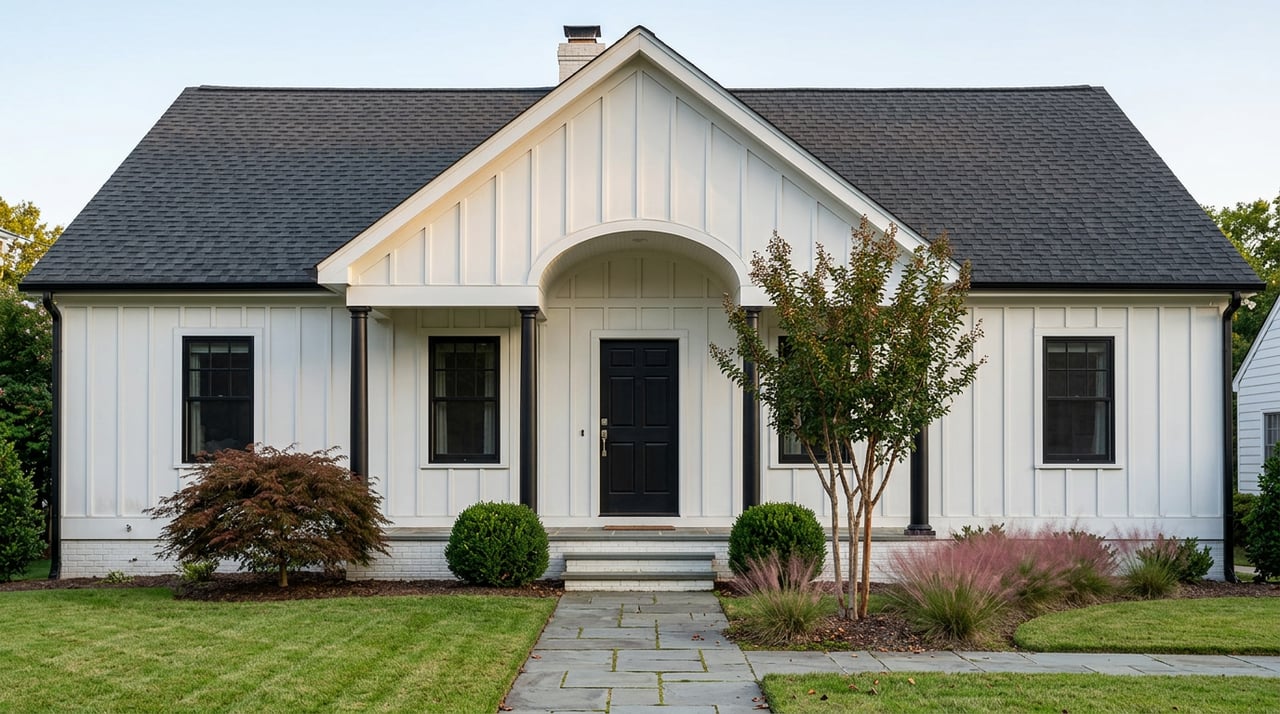
Durham's market in March 2026 argues the opposite. Watts-Hillandale, a neighborhood that has required a Certificate of Appropriateness for exterior changes since the city designated it a Local Historic District in 2003, posted a median sale price of $501,250 and a median of 30 days on market that month. Trinity Park, the architecturally similar neighborhood just to the east that carries National Register status but has never been designated a Local Historic District, posted a median of $445,000 and a median of 146 days on market over the same window.
| Watts-Hillandale | Trinity Park | |
|---|---|---|
| Local Historic District status | Yes, since 2003 | No (National Register only) |
| Certificate of Appropriateness required for exterior work | Yes | No |
| March 2026 median sale price | $501,250 | $445,000 |
| March 2026 median days on market | 30 | 146 |
The neighborhood with the stricter design-review process sold nearly five times faster than the one without it. If regulation were the thing slowing sales down, the numbers would run the other direction.
One caution belongs right next to that table: Trinity Park had only five closed sales that month, which is a small enough number that the median swings hard on a handful of transactions. Watts-Hillandale's 30-day figure is worth more confidence than Trinity Park's 146-day figure, and neither should be treated as a permanent verdict on either neighborhood. But the gap is large enough, and the direction is counterintuitive enough, that it's worth asking what's actually driving it.
Before ruling out the COA process as the explanation, it helps to know what it actually asks of an owner. A Certificate of Appropriateness is required for exterior changes to any property inside one of Durham's seven Local Historic Districts: Watts-Hillandale, Trinity Heights, Morehead Hill, Downtown Durham, Fayetteville Street, Cleveland-Holloway, and Golden Belt. Trinity Park proper isn't on that list, even though it sits inside the broader Trinity Historic District alongside Trinity Heights, which is.
Not every project triggers a full review. Minor changes, like a rear deck, are processed administratively by planning staff. Major changes, like a new garage or an accessory dwelling unit, go to Durham's Historic Preservation Commission, a nine-member volunteer board that meets the first Tuesday of each month and includes a registered architect, a realtor or builder, a historian, a lending or legal representative, and an appointed landscape architect. Paint color is explicitly not something the commission reviews. Anyone planning a major project is required to have a pre-submittal meeting with planning staff before filing the application, which is designed to catch problems before they become a hearing.
The rule with the most teeth is the demolition delay. An application to demolish a contributing structure inside a Local Historic District cannot be denied outright, but the commission can delay the effective date by up to 365 days while it works with the owner to find an alternative. Durham's planning staff has described real cases where that year mattered: one where an architect worked without charge to design an addition that saved the original house, and others where a new buyer stepped in specifically willing to renovate rather than tear down. The delay is a negotiating window, not a wall.
None of that process explains why Watts-Hillandale is outselling Trinity Park. If anything, it's evidence that the COA system is built to be workable, not to be an obstacle.
The more likely explanation sits in price and condition, not paperwork. Trinity Park's median build year runs around 1940, with some homes dating to the late 1800s, and its price range across recent listings has spanned from the $300,000s to well over $1 million depending on how much of the original house has been updated. That's an unusually wide band for one neighborhood, and it means the "median" is doing a lot of work to summarize houses that aren't really comparable to each other. A fully renovated four-bedroom two blocks from Duke's East Campus and an original 1920s bungalow with untouched systems both count as "a Trinity Park home," but they are not competing for the same buyer or moving at the same speed.
Watts-Hillandale's price band sits lower and tighter, and its Local Historic District status came with something Trinity Park's National Register listing doesn't provide: a documented preservation plan and design review criteria that give buyers a clearer sense of what they're allowed to change and what they're not, before they ever make an offer. That clarity may be worth more to a buyer than the freedom to skip a design review, especially in a neighborhood where the renovation math is already well understood by the local buyer pool.
The lesson for anyone selling in either neighborhood, or in any of Durham's other historic pockets like Old West Durham, Duke Park, or Old North Durham, is that the historic designation on the sign is not what a buyer's agent is going to price against. Condition, system age, and how clearly the seller can answer the questions on the disclosure form are what move the number.
Durham's pre-1960s housing stock carries a predictable set of issues, and they show up in nearly every inspection regardless of which historic district a house sits in.
Knob-and-tube wiring, common in homes built before the 1930s, is not illegal to leave in place, but most insurers and mortgage lenders won't write a standard policy against a house that still has it. A licensed electrician's inspection to certify the system's condition typically runs $200 to $500, and a full rewire of a modest single-story home runs $8,000 to $15,000, more for larger or harder-to-access houses. Sellers who get ahead of this with their own inspection can present buyers with a clear number instead of a question mark.
Underground, Durham's older neighborhoods commonly run on clay tile or cast iron sewer laterals, which develop root intrusion, joint separation, and interior corrosion over decades. A camera inspection of the main line typically costs a few hundred dollars and takes under two hours, and it either clears the house or gives both sides a real repair estimate to negotiate around instead of an unknown.
Then there's polybutylene piping, installed in many homes built between the late 1970s and mid-1990s, which North Carolina disclosure rules require a seller to note even if they believe the house has since been fully replumbed, because what's inside the walls can't be confirmed by looking at it.
The pattern across all three is the same. A seller who orders these inspections before listing controls the timeline and the negotiation. A seller who waits for the buyer's inspector to find them is negotiating from a weaker position, usually several weeks into a contract that now has to be renegotiated or walked away from.
Does historic designation hurt resale value in Durham? The data doesn't support that. Watts-Hillandale, under full COA oversight, is currently outselling Trinity Park on speed. What affects value and time on market is condition, price band, and how well-documented the home's systems are, not whether a Certificate of Appropriateness applies.
What's the difference between National Register status and Local Historic District status? National Register listing, which covers Trinity Park, is largely honorary and can make a renovation eligible for tax incentives, but it doesn't require city approval for exterior changes or restrict demolition. Local Historic District status, which covers Watts-Hillandale and six other Durham neighborhoods, adds the Certificate of Appropriateness requirement and the demolition delay provision.
Do I need a Certificate of Appropriateness just to sell my house? No. The COA requirement applies to exterior modifications, not to the sale itself. It only becomes relevant if you're doing exterior work, like replacing windows or adding a porch, before you list.
What if I want to tear down an accessory structure or the whole house? Inside a Local Historic District, that request can trigger the 365-day delay period, during which the commission works with the owner on alternatives. It's a real timeline consideration for anyone buying a historic property with redevelopment in mind.
Selling a historic Durham home comes down to the same thing selling any home does: knowing exactly what you have before someone else finds out for you. Kingsley Real Estate works with sellers across Durham's historic districts and the neighborhoods around them to line up the right inspections, price against real comparable condition instead of a neighborhood average, and get ahead of the questions a disclosure form can't answer on its own. If you're thinking about listing, start with a home valuation built on what your specific property can show, not just what the block name suggests.
Stay up to date on the latest real estate trends.
We pride ourselves in providing personalized solutions that bring our clients closer to their dream properties and enhance their long-term wealth.